

Are recyclable natural bamboo toothbrushes compliant with environmental standards?
Dec 29, 2025
In recent years, there has been a significant shift towards eco - friendly products, and recyclable natural bamboo toothbrushes have emerged as a popular alternative to traditional plastic toothbrushes. As a supplier of recyclable natural bamboo toothbrushes, I've often been asked whether these products are truly compliant with environmental standards. In this blog post, I'll delve into the science behind bamboo toothbrushes and explore their environmental impact.
The Environmental Crisis of Plastic Toothbrushes
Before discussing bamboo toothbrushes, it's essential to understand the environmental problem posed by traditional plastic toothbrushes. Plastic toothbrushes are made from non - biodegradable materials, primarily polypropylene. According to a report by the United Nations Environment Programme, around 4.7 billion toothbrushes are discarded annually in the United States alone. These toothbrushes end up in landfills, where they can take hundreds of years to decompose. Moreover, a significant amount of plastic waste also finds its way into the oceans, posing a severe threat to marine life.
Why Bamboo?
Bamboo is a remarkable plant with several properties that make it an ideal material for toothbrushes. Firstly, bamboo is one of the fastest - growing plants on Earth. Some species of bamboo can grow up to 91 cm (36 inches) in a single day. This rapid growth rate means that bamboo can be harvested sustainably without causing long - term damage to the environment.
Secondly, bamboo is biodegradable. When a bamboo toothbrush is discarded, it will break down naturally over time, usually within a few months to a couple of years, depending on the environmental conditions. This is in stark contrast to plastic toothbrushes, which can persist in the environment for centuries.
Compliance with Environmental Standards
To determine whether recyclable natural bamboo toothbrushes are compliant with environmental standards, we need to look at several factors, including material sourcing, manufacturing processes, and end - of - life disposal.
Material Sourcing
The first step in ensuring environmental compliance is to source bamboo from sustainable plantations. Sustainable bamboo plantations are managed in a way that minimizes environmental impact. For example, they use natural fertilizers and pest control methods instead of harmful chemicals. At our company, we work closely with certified bamboo suppliers who adhere to strict environmental standards. These suppliers ensure that the bamboo is harvested in a way that promotes forest regeneration and biodiversity.
Manufacturing Processes
The manufacturing process of bamboo toothbrushes also plays a crucial role in their environmental compliance. Traditional manufacturing processes often involve the use of large amounts of energy and chemicals. However, modern manufacturing techniques for bamboo toothbrushes are designed to be as eco - friendly as possible.
We use water - based adhesives and natural dyes in the production of our toothbrushes. These materials are non - toxic and have a lower environmental impact compared to their synthetic counterparts. Additionally, our manufacturing facilities are equipped with energy - efficient machinery, which reduces energy consumption and greenhouse gas emissions.
End - of - Life Disposal
One of the key advantages of bamboo toothbrushes is their biodegradability. When a consumer is done with a bamboo toothbrush, they can simply dispose of it in a compost bin. The bamboo handle will break down into organic matter, which can be used to enrich the soil.
However, it's important to note that the bristles of bamboo toothbrushes are often made from nylon, which is not biodegradable. To address this issue, some manufacturers, including us, are now offering toothbrushes with biodegradable bristles made from materials such as castor oil - based nylon or bamboo charcoal. These bristles have similar performance to traditional nylon bristles but are more environmentally friendly.
Comparing Bamboo Toothbrushes with Other Alternatives
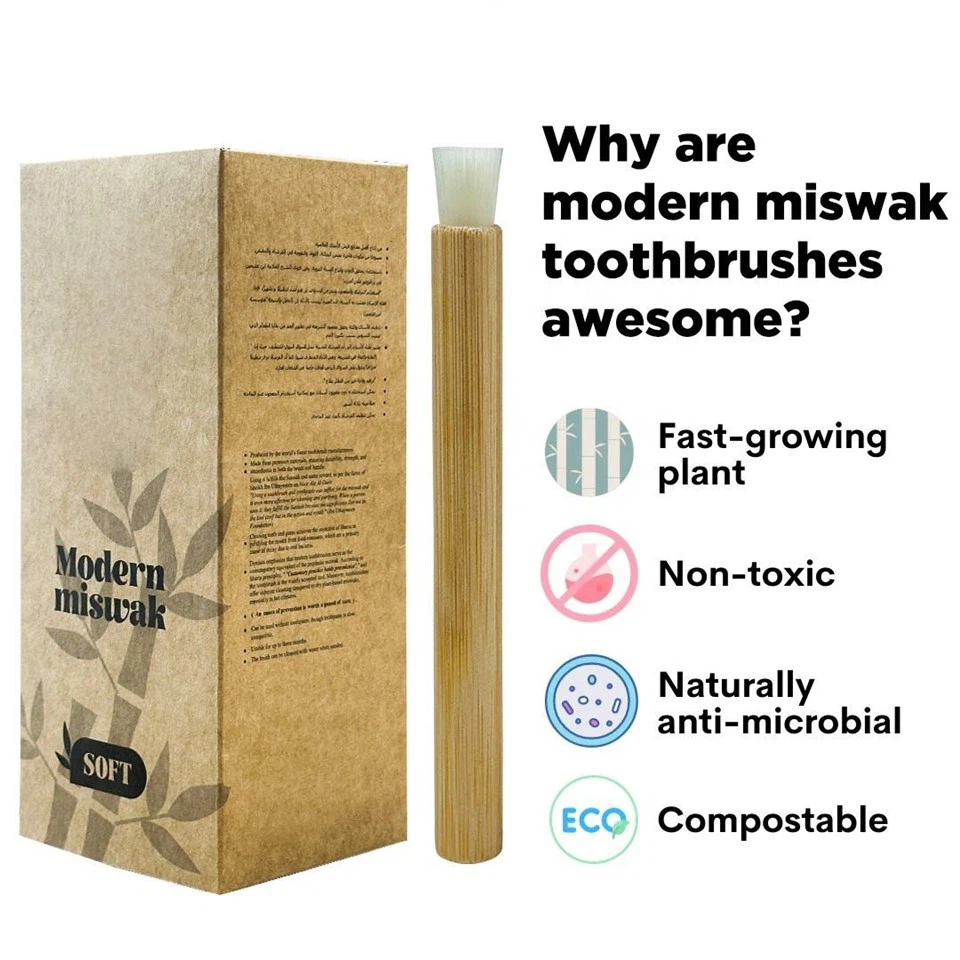
There are other eco - friendly toothbrush alternatives available in the market, such as Modern Miswak Toothbrushes. Miswak toothbrushes are made from the roots of the Salvadora persica tree and have been used for oral hygiene for centuries in many cultures.
While miswak toothbrushes have their own set of benefits, such as natural antibacterial properties, bamboo toothbrushes offer several advantages. Bamboo is more widely available and can be sourced more sustainably on a large scale. Additionally, bamboo toothbrushes can be designed to have a more modern and ergonomic shape, which may be more comfortable for some users.
The Future of Bamboo Toothbrushes
As consumers become more environmentally conscious, the demand for recyclable natural bamboo toothbrushes is likely to continue to grow. To meet this demand, manufacturers need to continue to innovate and improve the environmental performance of their products.
Research is underway to develop even more sustainable bristles and manufacturing processes. For example, some scientists are exploring the use of plant - based polymers for bristles, which could further reduce the environmental impact of bamboo toothbrushes.
Conclusion
In conclusion, recyclable natural bamboo toothbrushes are generally compliant with environmental standards. They are made from a sustainable and biodegradable material, and modern manufacturing processes are designed to minimize their environmental impact. However, there is still room for improvement, especially in the area of bristle materials.
If you're interested in making a more environmentally friendly choice for your oral hygiene, I encourage you to consider switching to a recyclable natural bamboo toothbrush. If you're a retailer or distributor looking to stock our products, I'd love to hear from you. We're always open to new partnerships and opportunities to expand our reach. Please feel free to reach out to discuss potential procurement and partnership opportunities.

References
- United Nations Environment Programme. (Year). "Plastic Pollution in the Oceans."
- Scientific Journal on Sustainable Bamboo Sourcing. (Year). "Sustainable Management of Bamboo Plantations."
- Research Paper on Biodegradable Toothbrush Bristles. (Year). "Development of Environmentally Friendly Toothbrush Bristles."